Orijen Original Cat & Kitten Dry Food (All Breeds & All Ages)
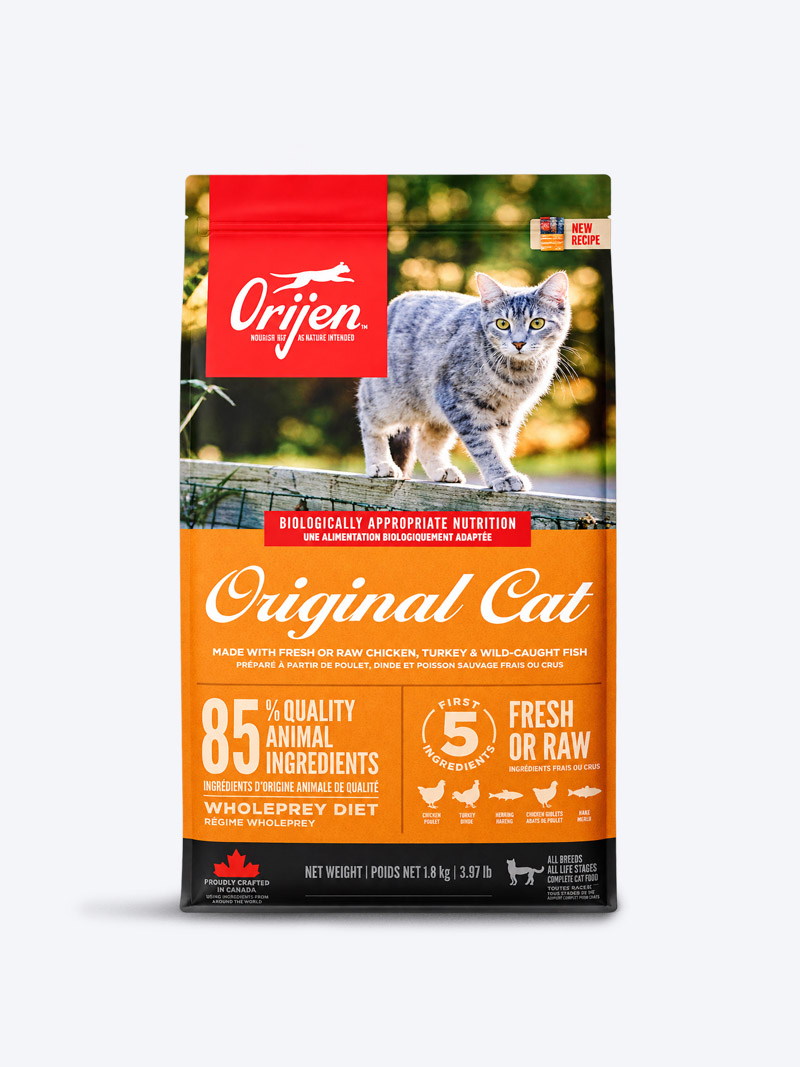
Feed your cat the way nature intended, as a carnivore, with Orijen Original Cat & Kitten Dry Food. Formulated specifically to meet the dietary requirements of cats and kittens of every breed and at every stage of their lives; this premium dry cat food is created using an abundance of quality animal-based ingredients and adheres to Orijen's WholePrey approach.
Orijen Original Cat & Kitten Food is made with fresh/raw poultry, fish, meat and other nutrient-rich animal-derived ingredients; therefore, the product provides high-protein nutrition for kittens (growing), adult cats (active) and senior cats. Orijen Original Cat & Kitten Food also features a grain-free formula which has made it one of the most popular cat foods among pet owners who want to feed their pets a premium, meat-based diet.
Whether you are caring for a young kitten that is full of energy, a mature indoor cat that may be less active than it was in its youth, or even a multi-cat household where some members are younger and some are older; this formula allows you to provide the same type of food for all of your cats regardless of their age.
The ingredients in Orijen Original Cat and Kitten Dry Food are as follows: Fresh deboned chicken (20%), Fresh deboned turkey (10%), Fresh eggs (9%), Fresh chicken liver (8%), Fresh whole herring (5%), Fresh whole mackerel (5%), Fresh whole flounder (5%), Fresh turkey liver (5%), Fresh chicken heart (5%), Fresh turkey heart (5%), Dehydrated chicken (4%), Dehydrated turkey (4%), Dehydrated herring (4%), Dehydrated mackerel (4%), Dehydrated flounder (4%), Fresh chicken neck (3%), Fresh whole eggs (2%), Fresh whole herring (2%), Fresh whole mackerel (2%), Fresh turkey neck (2%), Fresh whole eggs (1%), Fresh whole herring (1%), Fresh whole mackerel (1%), Fresh whole flounder (1%), Dehydrated chicken cartilage (1%), Dehydrated turkey cartilage (1%), Freeze-dried chicken liver (0.1%), Freeze-dried turkey liver (0.1%), Freeze-dried chicken heart (0.1%), Freeze-dried turkey heart (0.1%), Dried kelp (0.01%), Fresh whole pumpkin (0.01%), Fresh whole butternut squash (0.01%), Fresh whole apples (0.01%), Fresh whole pears (0.01%), Fresh whole blueberries (0.01%), Fresh whole cranberries (0.01%), Dried chicory root (0.01%), Turmeric root (0.01%), Milk thistle (0.01%), Burdock root (0.01%), Lavender (0.01%), Marshmallow root (0.01%), Rosehips (0.01%), Choline chloride (0.01%), Zinc proteinate (0.01%), Copper proteinate (0.01%), Manganese proteinate (0.01%), Sodium selenite (0.01%), Niacin (0.01%), Thiamine mononitrate (0.01%), Vitamin E supplement (0.01%), Riboflavin (0.01%), Pyridoxine hydrochloride (0.01%), Vitamin A supplement (0.01%), Vitamin D3 supplement (0.01%), Vitamin B12 supplement (0.01%), Biotin (0.01%), Folic acid (0.01%).
Orijen Original Cat & Kitten Dry Food uses animal ingredients to build the basis of its recipe. The list of ingredients used in this formula include fresh/raw free-run chicken and turkey, whole fish and organ meats, which provide both an animal-based source of protein and naturally occurring nutrients.
The formula is based on Orijen's Whole Prey concept, which includes various parts of an animal (meat, organs, cartilage, and bone) that represent what a cat may consume in the wild. This concept was created to provide a cat with the wide range of nutrients it needs to thrive.
Key features of this product are:
The manufacturers formulation information indicates that there are 85% high quality animal ingredients in this product.
Fresh and/or raw poultry/fish are excellent sources of animal protein.
The formulation does not contain grains; rather it utilizes selected vegetable and fruit products along with other plant based ingredients to provide the necessary amount of carbohydrates.
A mixture of meat, organs, cartilage and bones is based on the WholePrey concept.
Freeze-dried liver coating used for enhanced flavor and palatability.
Cats are naturally carnivores, and therefore need high-protein food.
Suitable for Kittens, Adult Cats and Senior Cats
The most significant advantage of Orijen Original Cat & Kitten Food is that it is formulated for every life stage.
You can use it as a good fit for:
Growing kittens
Adult cats
Senior cats
Indoor cats
Cats of various kinds
Multi-Cat Household with Various Ages
The high nutrient content of kitten formulas supports rapid growth and development at a critical point in a kitten's life. A high-protein daily diet is appropriate for adult cats; senior cats can use the same formula if it meets their nutritional needs as determined by their veterinarian.
Por portion control for the indoor cat and the inactive cat is especially important since daily calorie intake can differ greatly based upon your cat’s activity level, current weight, and age.
Feeding Guide
The correct amount of food to serve a cat varies according to age, weight, activity level, and specific nutritional requirements. To determine the best daily feeding guide, consult the feeding chart on the product label of your current Orijen product.
You need to provide your pet with the right amount of food several times during the day and make sure they have access to a clean and fresh supply of drinking water at all times.
A gradual switch is suggested when you begin to feed your cat Orijen Original Cat & Kitten Food. Switching quickly from one type of food to another can lead to short-term stomach problems for some cats.
Food Change Suggested
Approximately 1/4 (or 25 percent) of the new food will be mixed with approximately 3/4 (or 75 percent) of the food you have been feeding your dog.
Days 4-6: Approximately 50 percent of the old diet and approximately 50 percent of the new diet.
Days 7 through 9: about 75 percent new food, and about 25 percent old food
From day 10 onward: if your cat seems comfortable with the switch, you can now feed them 100% of the new food.
Individual cats may need a slower introduction to new food, especially if the cat has sensitive digestion.
As long as your cat is eating at least once every 24 hours, there should be no health concerns. However, if your cat has gone longer than that without food, you may need to take action. If your cat does not eat for 48 hours or more, she could develop Hepatic Lipidosis (Fatty Liver Disease). Fatty liver disease can cause her to become weak, lose weight rapidly, vomit, and eventually die. To prevent this from happening, make sure your cat is eating on a daily basis. If your cat stops eating for more than 24 hours, contact your veterinarian immediately. What Do I Feed My Cat? There are many different types of cat food available today. Each type of cat food contains a different blend of ingredients. Some foods are better suited for specific life stages of cats. For example, some foods are designed specifically for kittens while others are designed for older adult cats. You will also find that some foods are formulated to help manage certain health issues in cats. When choosing a food for your cat, consider her age, activity level, and any health problems she might have. You should also choose a food that is high-quality and free of artificial additives. How Much Should I Feed My Cat? Your cat's feeding schedule will depend on her age, size, activity level, and overall health status. Generally speaking, younger cats require more calories per pound than older cats. Cats that are highly active also tend to consume more calories. Your veterinarian can assist you in determining the appropriate amount of food to provide your cat based on these factors. How Often Should I Feed My Cat? Most veterinarians recommend feeding cats two times each day. Many cat owners prefer to feed their cats once each day. Whichever routine works best for you, just be consistent. Consistent feeding schedules allow your cat to anticipate when she will receive her next meal. This helps to reduce anxiety and stress in your pet. If your cat is prone to obesity, you may want to limit her meals to once each day. This can help prevent overeating and weight gain. What If My Cat Eats Too Fast? Many cat owners experience problems with their pets eating too quickly. Eating too fast can lead to several problems including vomiting, diarrhea, bloating, gas, and weight loss. If you notice that your cat is eating too quickly, there are things you can do to slow down her consumption of food. First, try to place her bowl on the floor rather than on a raised surface. Second, try using a slow-feeder bowl. These bowls have raised ridges inside them that force your cat to eat around the ridge. Third, try to divide your cat's daily portion of food into smaller portions throughout the day. Fourth, try giving your cat small treats during the day. Finally, try to engage your cat in play sessions prior to mealtime. All of these techniques can help slow down your cat's consumption of food and prevent associated health problems. Can I Give My Cat Human Food? While some human foods are safe for cats to consume, most human foods can be harmful to your pet. Human foods contain high amounts of sodium and fat, both of which can lead to obesity in cats. In addition, some human foods contain ingredients that are toxic to cats such as onions and garlic. If you wish to give your cat human food, it is important to research which human foods are safe for cats to consume. Additionally, it is important to remember that human food should only account for a small percentage of your cat's total diet. If you choose to feed your cat human food, make sure to monitor her closely for signs of illness or allergies. Is It OK To Mix Different Brands Of Cat Food? Generally speaking, mixing different brands of cat food is acceptable as long as you do so gradually. Gradual introduction of new foods into your cat's diet will allow her body to adjust to the new ingredients. If you mix different brands of cat food too quickly, your cat may develop an upset stomach or diarrhea. To avoid these types of problems, mix small amounts of the new food into your cat's current food over a period of several days. Once your cat has become accustomed to eating the mixed food, you can begin increasing the ratio of new food to old food until your cat is eating only the new food. Are There Any Supplements I Should Give My Cat? There are many different supplements available for cats. Some supplements are designed to improve joint function while others are designed to promote healthy skin and coat. Before purchasing supplements for your cat, consult with your veterinarian. Your veterinarian can recommend supplements that would benefit your cat based upon her individual needs. Do I Need To Wash My Cat's Bowls? It is recommended that you wash your cat's bowls daily. Washing your cat's bowls daily will help prevent bacteria from growing on them. Bacteria can grow on dirty bowls and transfer to your cat's mouth when she licks the bowl. Bacteria from dirty bowls can also enter your cat's bloodstream through wounds on her gums. Therefore, keeping your cat's bowls clean is essential for maintaining your pet's overall health. When Should I Take My Cat To See The Vet? It is recommended that you visit your veterinarian regularly for routine check-ups. Regular visits to your veterinarian will enable him/her to detect early signs of illness or disease in your pet. Early detection of illness or disease allows for early treatment options. Additionally, regular veterinary visits provide opportunities for vaccinations and other preventive care measures. In addition to scheduled visits with your veterinarian, there are numerous other reasons why you might need to schedule an appointment with him/her. Examples include: * If your cat experiences a sudden change in behavior * If your cat exhibits signs of pain or discomfort * If your cat loses weight unexpectedly * If your cat develops a lump or bump on her body * If your cat begins to exhibit signs of lethargy * If your cat begins to exhibit signs of dehydration * If your cat experiences a loss of appetite * If your cat experiences a seizure * If your cat experiences a fracture * If your cat experiences a puncture wound * If your cat experiences a cut or abrasion * If your cat experiences an allergic reaction * If your cat experiences a urinary tract infection * If your cat experiences a respiratory infection * If your cat experiences an ear infection * If your cat experiences a skin infection * If your cat experiences a dental infection * If your cat experiences a heart condition * If your cat experiences kidney disease * If your cat experiences liver disease * If your cat experiences diabetes * If your cat experiences hyperthyroidism * If your cat experiences hypothyroidism * If your cat experiences Cushing's disease * If your cat experiences Addison's disease * If your cat experiences cancer * If your cat experiences an autoimmune disorder * If your cat experiences a neurological disorder * If your cat experiences a gastrointestinal disorder * If your cat experiences a musculoskeletal disorder * If your cat experiences an endocrine disorder * If your cat experiences a reproductive disorder * If your cat experiences a sensory disorder * If your cat experiences a congenital defect * If your cat experiences a genetic disorder * If your cat experiences a nutritional deficiency * If your cat experiences a toxic exposure * If your cat experiences a parasitic infestation * If your cat experiences a fungal infection * If your cat experiences a viral infection * If your cat experiences a bacterial infection * If your cat experiences a protozoal infection * If your cat experiences a rickettsial infection * If your cat experiences a mycoplasmal infection * If your cat experiences a chlamydial infection * If your cat experiences a spirochetal infection * If your cat experiences a nematode infection * If your cat experiences a trematode infection * If your cat experiences a cestode infection * If your cat experiences an acanthocephalan infection * If your cat experiences a pentastomid infection * If your cat experiences a linguatulid infection * If your cat experiences a tardigrade infection * If your cat experiences a rotifer infection * If your cat experiences a gastrotrich infection * If your cat experiences a kinorhynch infection * If your cat experiences a priapulid infection * If your cat experiences a nematomorph infection * If your cat experiences a gnathostomulid infection * If your cat experiences a loriciferan infection * If your cat experiences a xenoturbellid infection * If your cat experiences an acoelomorph infection * If your cat experiences a placozoan infection * If your cat experiences a dicyemid infection * If your cat experiences an orthonectid infection * If your cat experiences a cycliophoran infection * If your cat experiences a micrognathozoan infection * If your cat experiences a monoblastozoan infection * If your cat experiences a chaetognath infection * If your cat experiences a hemichordate infection * If your cat experiences an echinoderm infection * If your cat experiences a urochordate infection * If your cat experiences a cephalochordate infection * If your cat experiences a vertebrate infection
If your cat is overdue for a meal, or if he misses a few meals, just go back to your regular feeding routine. Don't try to make up for the missed meal by feeding him more food than usual during the next meal. Overeating can cause digestive upset.
In contrast to the previous point about cats being able to go without eating for short periods of time, you cannot afford to ignore a cat who is not eating for longer than that. When your cat stops eating for approximately 24 hours (or more) or exhibits additional worrisome signs, it is important to contact your vet immediately.
Possible Reactions to Food and Drink (Digestion)
Cats are generally very accepting of changes that are made slowly. However, there will always be differences in how each cat reacts.
Cats will occasionally have a short term change in how firm their feces are or have some light stomach problems as they adjust to their new food. It is recommended to slowly introduce the new food so that this problem does not occur as often.
If digestive issues continue to be a problem, get worse over time, or if your pet has other symptoms such as vomiting, lethargy, decreased appetite, etc., then you should see your veterinarian.
safety information & precautions
When considering changing what you feed your cat, keep in mind his/her unique health and dietary needs.
Always have a supply of fresh drinking water.
Follow the recommended amount of food as shown on your present package.
If your cat has been diagnosed with a condition such as kidney disease, liver disease or another type of medical problem, he/she will probably need to eat a food that has been recommended for him/her by a veterinarian.
Please consult with your veterinarian regarding any previous medical conditions and/or special dietary needs for your pet.
Do not give this food to your pet when the packaging has been damaged, opened incorrectly, or the food looks like it may have become contaminated.
Please check the best before date prior to feeding.
Keep the product out of reach of children.
The product being advertised is specifically designed for use by cats, and should never be eaten by humans.
How to Keep Orijen Original Dry Cat and Kitten Food Fresh.
Properly storing dry cat food will help preserve the freshness and overall quality.
The food should be kept in a cool, dry area that is shielded from the sun, dampness, and extreme temperatures. Once the package has been opened, you can either reseal it correctly, or move the food into a clean and sealed pet food container.
Avoid storing dry cat food in damp areas or near sources of heat. Always use clean, dry utensils when handling the food.
Why should you choose Orijen Original Cat and Kitten Food?
Orijen Original Cat & Kitten Dry Food provides a high-quality, meat-based nutritional option for pet owners looking to provide their cats with a premium food product that will support them throughout all of their life stages.
It is advantageous because of:
The majority of the meat used is from high quality animals.
Great for kittens as well as adult cats.
Suitable for cats of various breeds
Grain-free recipe
Protein-rich food source.
WholePrey Ingredient Approach
The use of un-cooked and/or non-processed animal products.
Can be used in multi-cat households with cats of varying ages.
Every day use dry food format.
Orijen Original Cat & Kitten Dry Food can be purchased online in India.
Are you searching for "Orijen Original Cat & Kitten Dry Food" within India? You can purchase this item via our website, PetIndiaOnline.com, where we provide you with access to some of the highest-quality cat and kitten foods available today.
Orijen Original Cat & Kitten Dry Food provides a nutrient-dense, daily diet that supports the nutritional requirements of cats at every stage of their lives. Orijen Original Cat & Kitten Dry Food is formulated based on the evolutionary diets of wild cats.
Always make sure to feed your cat the proper amount depending on their personal needs; and always contact your veterinarian if you have any special diet or medical concerns with your cat.

 0


 10